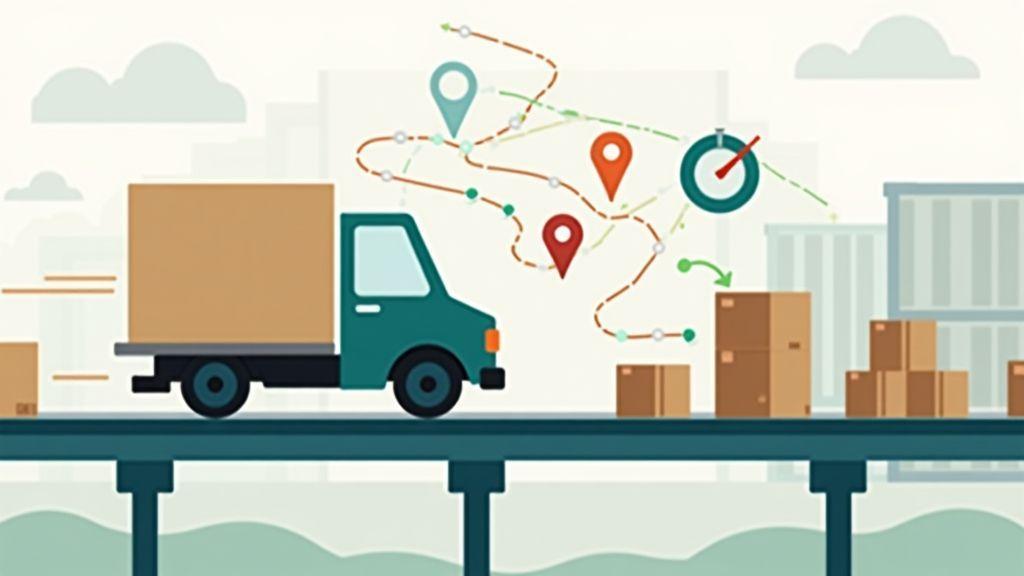
Logistics Strategies to Slash Costs and Speed Up Delivery
Subscribe to our newsletter
Logistics gets faster and smarter when you automate the heavy lifting. Learn how Invoice OCR and bill of lading parsing cut manual entry and speed billing. See how named entity recognition for locations and dates helps customs and routing. Discover contract clause extraction and semantic search to find key terms across supply chain documents. Follow real-time tracking with shipment status extraction from EDI, emails, and sensors, and how incidents and delays get spotted. Explore ETA prediction that uses routes, traffic, and weather and the tools that feed it. Find how intent classification and chatbots make customer care smarter — linking chatbots to semantic search and status feeds slashes costs and speeds delivery in modern Logistics.
Automating Logistics documents with Invoice OCR and Bill of lading parsing
You can turn stacks of paper and PDFs into clean data fast. Invoice OCR reads numbers, dates, and vendor names from scans or photos. Bill of lading parsing pulls shipper, consignee, commodity, and container IDs. Put those together and your team spends hours less on typing and fixing errors.
When data flows into your systems automatically, billing, tracking, and claims move at real speed. Your TMS and ERP get structured records instead of images, so invoices can be matched to purchase orders in minutes and shipments can be checked against bills of lading without manual copy-and-paste.
Start small and scale. Pick the most common invoice and bill formats your partners send and train the parser on those samples. You’ll see disputes fall, cash flow improve, and people shift from grunt work to higher-value tasks.
Invoice OCR and parsing to cut manual entry and speed billing
OCR turns pixels into text so you can extract invoice number, total, tax, line items, and PO numbers without human typing. The parser maps those fields into your billing system so bills can be checked and routed automatically.
You get faster cycle times and fewer mistakes. Instead of hunting for a missing PO or retyping amounts, your team sees flagged mismatches on a dashboard. That saves days on billing and trims dispute rates — turning accounts payable into a streamlined part of Logistics operations.
Named entity recognition for locations and dates helps customs and routing
Named entity recognition finds place names, ports, and key dates inside documents. It spots “Los Angeles Port” or “Hamburg” and tags them as locations, and pulls ETAs, shipping dates, and laycan windows so customs and routing receive accurate inputs.
When location names are parsed and mapped to real coordinates, your routes and clearance forms are correct. That cuts delays at borders and keeps drivers and vessels moving instead of stuck in red tape.
Contract clause extraction and semantic search for supply chain documents
Contract clause extraction pulls terms like payment terms, liability caps, incoterms, and delivery windows from long agreements. Semantic search then lets you ask plain questions — show me all force majeure clauses — and find every relevant contract. That saves time in negotiations, claims, and audits across the Logistics chain.
Real-time Logistics tracking with Shipment status extraction and incident and delay detection
Real-time Logistics tracking gives you a live window on every move your goods make: pickups, handoffs, and arrivals as they happen. That live feed turns guessing into action — call a driver, reassign a load, or alert a customer in minutes instead of hours.
Incident and delay detection watches for sudden changes that matter. A sudden stop, a missed scan, or a temperature spike will flag an alert. Machine rules and simple patterns catch common problems fast, while models spot odd behavior that hints at bigger trouble.
Acting on those signals cuts wait time and phone calls, keeps promises to customers, and saves money on detours or spoilage. Think of it like a smoke alarm for your supply chain — you get warned early and can put out the fire before it spreads.
Shipment status extraction from EDI, emails, and sensors for live visibility
EDI streams like ASN (856) give formal event data but can be dense. Parse EDI to pull shipment IDs, timestamps, and status codes and build a clean backbone of events mapped to purchase orders or invoices.
Emails and carrier messages fill gaps EDI misses. Use text parsing and NLP to pull tracking numbers, exception notes, and ETA updates from inboxes. Sensors — GPS, temperature, door sensors — add live telemetry. Merge all three to create a single, up-to-date timeline showing where a load really is.
Delivery ETA prediction uses routes, traffic, and weather to set arrival times
ETA models mix route distance, historic drive times, live traffic, and weather effects. Feed them planned stops, driver shifts, and vehicle limits to produce arrival windows and confidence scores you can act on.
When traffic or storms hit, ETAs update automatically. Re-route a truck or push a revised time to the customer to reduce failed deliveries and keep drivers moving instead of sitting idle at a congested port or highway.
Tools and data sources for ETA prediction and incident alerts
Pull data from GPS telematics, carrier EDI, emails, IoT sensors (temp, humidity, door), traffic APIs (Google, HERE, TomTom), weather services (NOAA, Meteo, commercial APIs), AIS for vessels, crowdsourced feeds like Waze, TMS/WMS records, and public event or closure feeds. Combined, these sources feed your models, alerts, and live map so you get accurate ETAs and quick incident notices across Logistics operations.
Smarter customer care in Logistics with Intent classification for customer inquiries and support chatbots
Intent classification sorts what customers want in seconds. A message gets labeled as “delivery status,” “damage claim,” or “customs question,” and routed to the right bot or team. Simple requests go to automated flows; complex ones go to an agent who already has the context. That lowers wait times and reduces repetitive work.
When intent models work well, repeat tickets drop and customer ratings improve. Chatbots handle routine tasks like tracking and FAQs, while agents handle exceptions. You scale support without hiring a fleet of new staff, cutting cost and improving service in Logistics.
Intent classification routes questions fast and cuts response time
Intent classification reads the meaning behind short messages using keywords, patterns, and context. If a customer writes “My package didn’t arrive,” the classifier maps that to “delivery issue” instead of “billing,” making response routing instant.
Labeling intent lets your system trigger automated replies or workflows. For “address change,” the bot asks for a new address and updates the record. If unsure, it flags for human review. The result is less waiting and fewer wasted agent minutes.
Logistics support chatbots answer FAQs and escalate complex issues
Chatbots can handle many routine questions: shipment locations, pickup windows, and return instructions. They read tracking numbers and reply in a human tone so responses feel friendly and clear. Customers get what they want fast.
When escalation is needed, chatbots collect facts first — order IDs, photos, timestamps — so the agent sees everything on one screen. That handoff keeps customers calm and gets issues solved quicker, avoiding long hold times and repeated explanations.
Link chatbots to semantic search and shipment status extraction
Connect chatbots to semantic search and a status extractor so they can read documents and pull facts. Bots can search emails, manuals, and support articles for answers and extract tracking numbers, delivery dates, and exception codes from messages to return a clear status line to the customer. This integration tightens the loop between customer support and operational Logistics data.
Getting started with Logistics automation
- Identify high-volume documents (invoices, bills of lading) and common message types to prioritize OCR and parsing.
- Pilot with one carrier or customer and iterate on parsers and NER models using real samples.
- Integrate parsed data into your TMS/ERP and connect status feeds (EDI, email, sensors) for a unified timeline.
- Add intent classification and a simple chatbot to handle frequent inquiries, then link to semantic search as you scale.
Conclusion
Automating document extraction, real-time tracking, ETA prediction, and customer support transforms Logistics from reactive to proactive. You reduce manual work, speed billing and delivery, cut disputes, and improve customer service — all while scaling operations more efficiently. Start small, focus on the highest-impact data flows, and expand automation across the Logistics stack for measurable gains.

Post Comment